WELCOME CONTACT WITH US THROUGH WHATSAPP: +86 180 0549 3293

Right Method To Avoid ‘Collapsed’ While Cutting Sintered Stone Slab?

With the rapid development and the increase in sales, Demand for sintered stone slab processing and cutting and the deep processing of various home furnishings are also increasing, and the processing problems are also increasing.
At the same time, processing technology is also becoming more and more perfect. The following is the cutting and processing experience summarized by the stone slab processing master, it is recommended to collect!
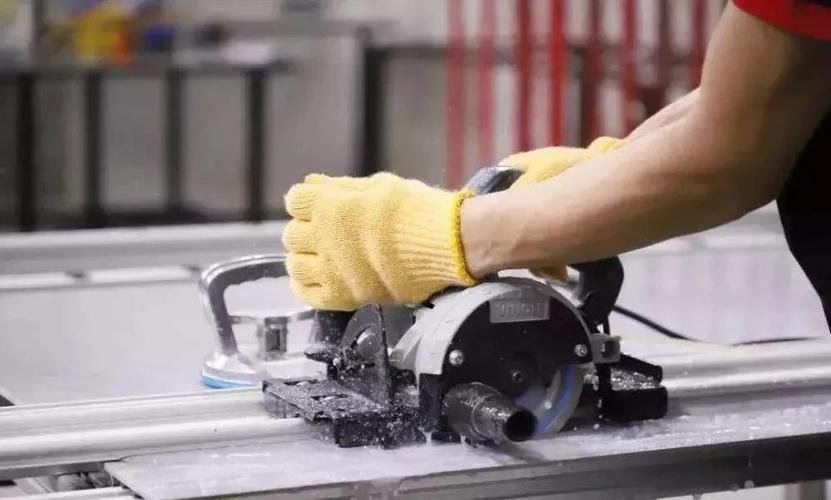
Cutting And Processing Of Sintered Stone Slabs
Before processing, check the processing method given in the technical parameter table of the product to be installed, and process the product in combination with the selected installation method.
When designing a kitchen countertop, keep at least 50mm from the border of the countertop with holes or grooves. Similarly, at least 50mm should be reserved between two adjacent openings.
Design of inner corners and openings. As usual with stone, marble, and joint materials, draw an arc length of at least 5mm radius at each corner to disperse the pressure.
Right-angle inner corners can be cut directly by a water jet, but it is not recommended. Because of this inner angle design, the risk of cracking the countertop will increase during processing, handling, transportation, and installation, thereby endangering other items in the kitchen
During the quality inspection of sinks or hobs, reserve at least 2mm margins to avoid the influence of expansion.

When embedding a prefabricated sink, chamfer the edge of the hole of the 18mm sintered stone slab.
When embedding a prefabricated sink or hob, use special glue, silicone resin, or similar utility products to bond and seal.
Use one or two support columns to support the built-in sink to prevent the countertop from being overloaded.
When installing the countertop, leave 2-3mm of space between it and the wall.
When designing an “L”-shaped countertop, it is best to use a straight style. Use special glue to glue the joints when installing. We not recommend Angle joints.
Check whether the directional texture of the joints is consistent to ensure the best joint effect.
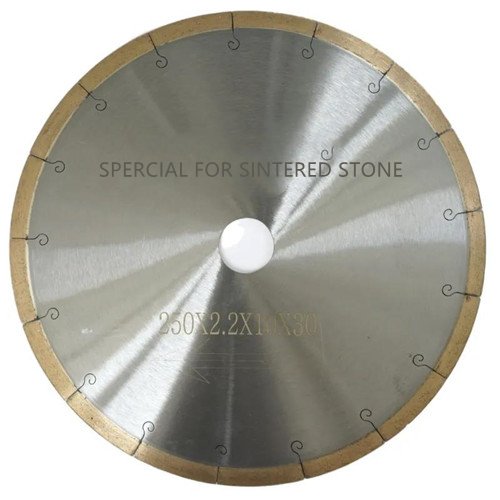
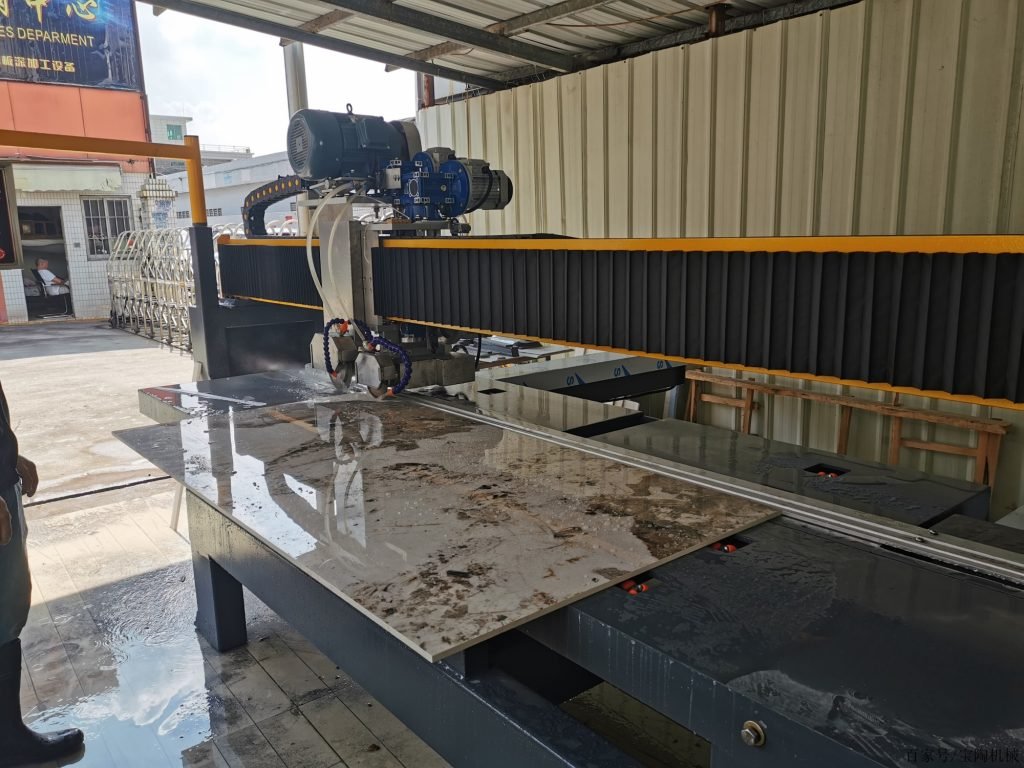
The product can be processed using a saw blade or a water jet cutting machine specifically for cutting sintered stone slabs. A cutting machine for straight-line cutting of flat glass can also be used. (sintered stone slabs can be processed using quartz stone processing equipment, but the quartz stone saw blade needs to be replaced with a sintered stone slab saw blade).
Before Cutting, Check The Cutting Machine, Especially in The Following Aspects:
The cutting tools must be suitable for the sintered stone products and have good performance.
The workbench of the machine must be clean, durable, solid, and undamaged.
The workbench of the machine must be completely horizontal.
There must be no waste from previous processing on the workbench of the machine, and the surface must be normal. Therefore, to achieve the best results, the operator should take samples for actual testing and make actual adjustments before cutting.
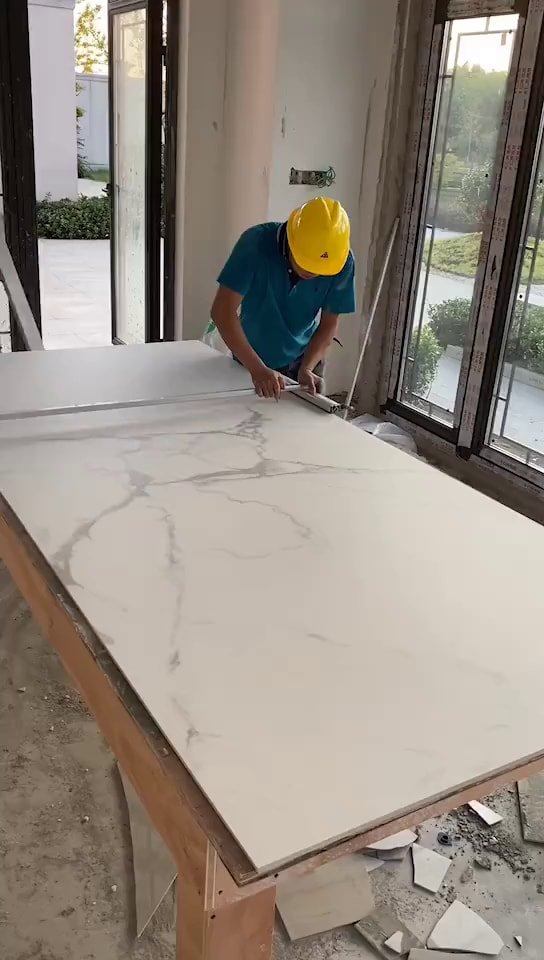
If you are not satisfied with the cutting effect, or the sintered stone slab breaks during the cutting process, it may be due to improper feed speed, operating pressure, prop speed, uneven cutting table, or movement or vibration of the sintered stone slab during cutting, improper cutting tools, etc.
After processing, be careful when carrying the sintered stone slab, especially when there is an opening or hole in the middle of the sintered stone slab. Use multi-cup suction cups to avoid lifting the slab directly on the edge at both ends to avoid bending the finished product. Be careful when moving and transporting vertically manually to avoid twisting and breaking.
Use a Special Cutting Disc Or High-Quality Diamond Cutting Disc
Both U-shaped cutting discs and toothless saw blades are ok for cutting.
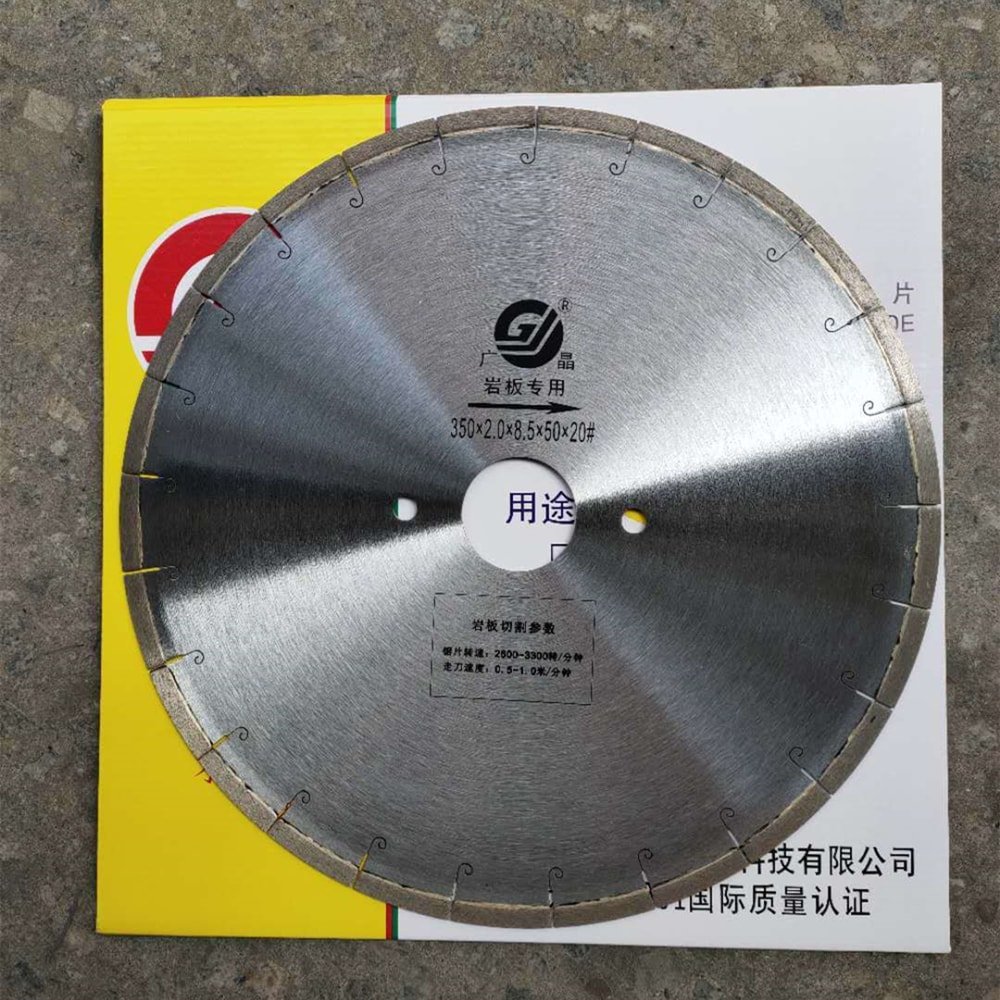
During cutting, the sintered stone must be fed in the same direction as the cutting disc rotates.
The cutting opening is proportional to the thickness of the cutting disc.
Before cutting, check the cutting machine and the table must be in good condition, flat, completely horizontal, and free of machining waste.
The smaller the radius of the cutting disc, the greater the spindle speed.
The slower the feed rate, the better the cutting effect.
A slow feed rate ensures a reduction in the edge bevel.
The feed and discharge rates should always be 50% slower than the rated speed.
Correct orientation and the right amount of water.
The cutting disc should be exposed as little as possible, at least one millimeter beyond the plate thickness.
The lower the vibration during the cutting operation, the better the effect. To reduce vibration, place a disposable wooden board or rubber-based (e.g. vulcanized rubber) board under the sintered stone.
The machine is set up to cut the sintered stone diagonally. To allow two slabs to be joined and cut at 45°, the cutting edges need to be chamfered.
When cutting at 45°, a thickened cutting disc can be used to reduce vibration during cutting and reduce the risk of slab breakage.
When making an “L”-shaped cut, first find an angle to make a small circular hole, then make a straight cut, and the part close to the circular hole needs to be manually processed with an angle grinder.
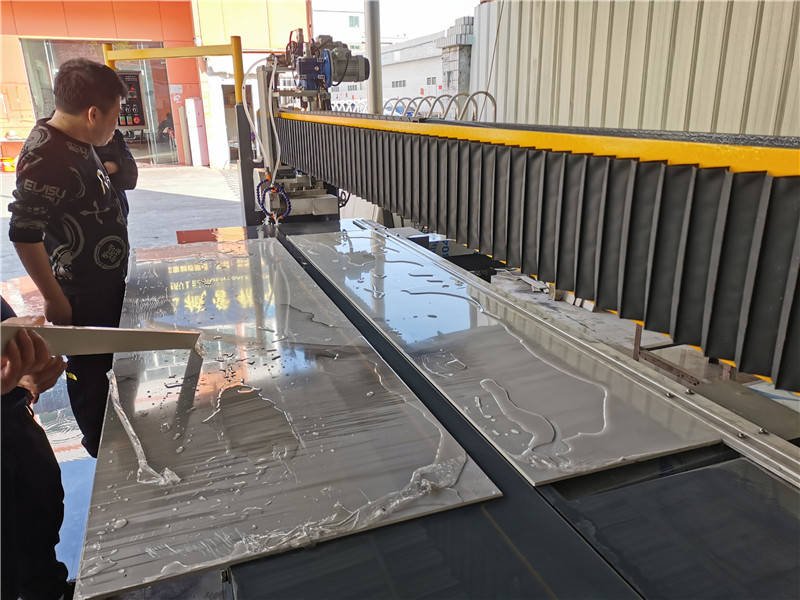
After each process is completed, before the cut product is dry, use clean water to clean the dust left by the surface slab processing. After completing a series of cuts, use aluminum oxide or quartz blocks to maintain the cutting disc.
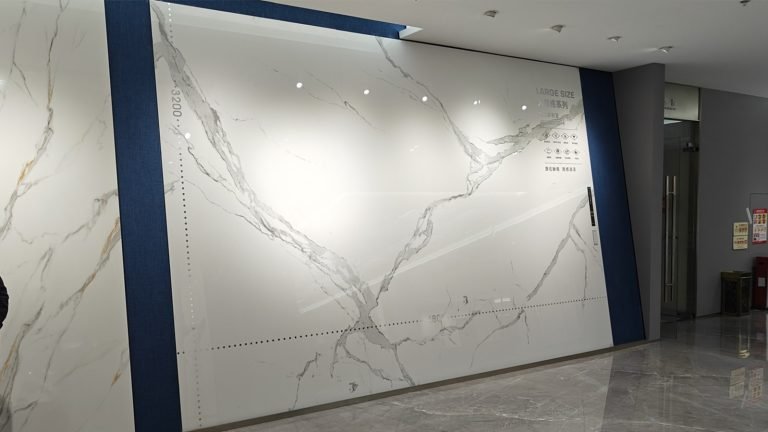
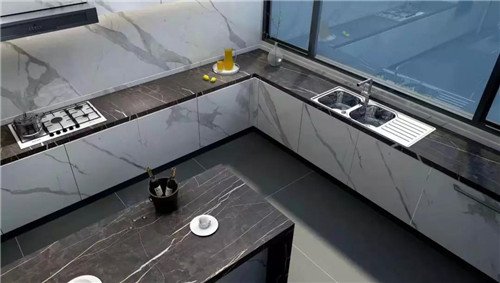
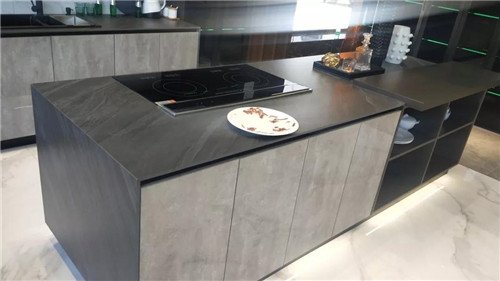
Finished Sintered Stone Slabs Works
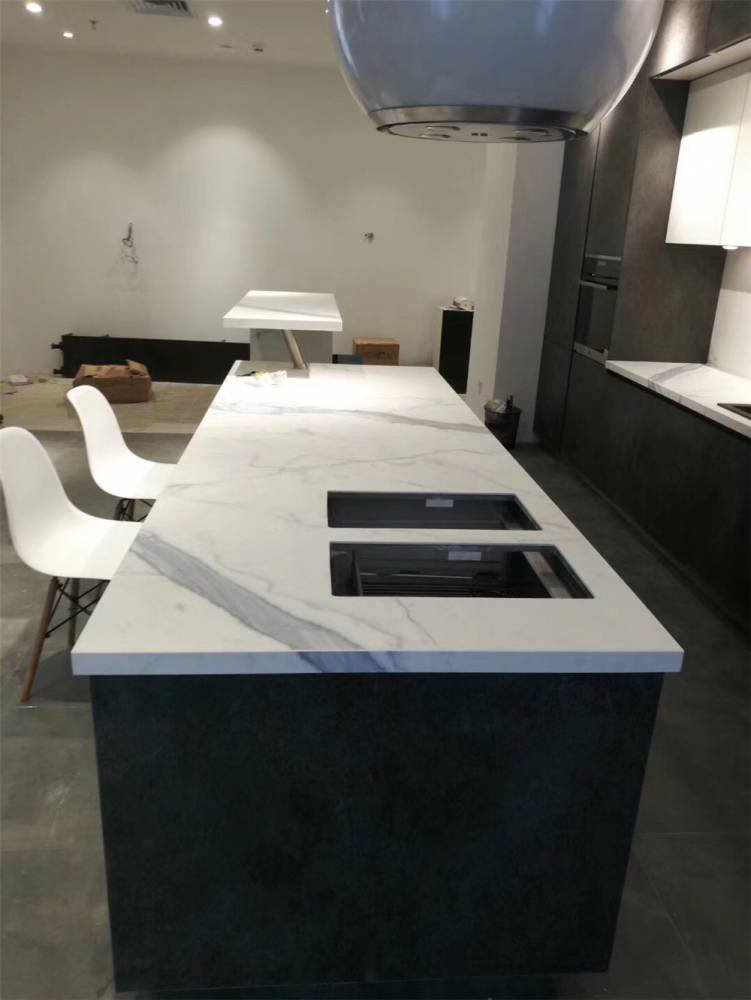
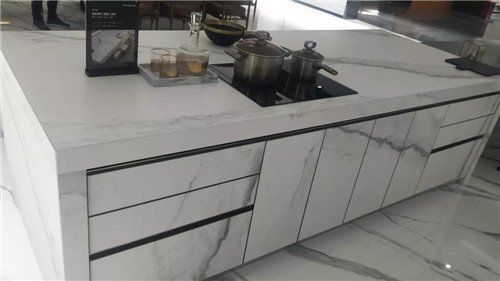
IN THE END
As A New Stone Product, SINTERED STONE Has Become A Strong Competitor To Marble, Granite And Quartz Stone. Sintered Stone Is A Stone You Can Not Ignore. If You Also Want to Develop A Brand Of Your Own, Come To Us, We Are The Right Choice.
CONTACT US AT
Email: hero@linxsintered.com
WhatsApp: +86 180 0549 3293
USEFUL LINKS
YOUTUBE CHANNEL: LINX SURFACES CHINA
WIKI: Sintered Stone Linx “Wikipedia”